

What Is a Sovereign Cloud: Definition, Benefits, and How to Choose a Provider in 2026
 TGRank editorial team
November 23, 2026
9 min read
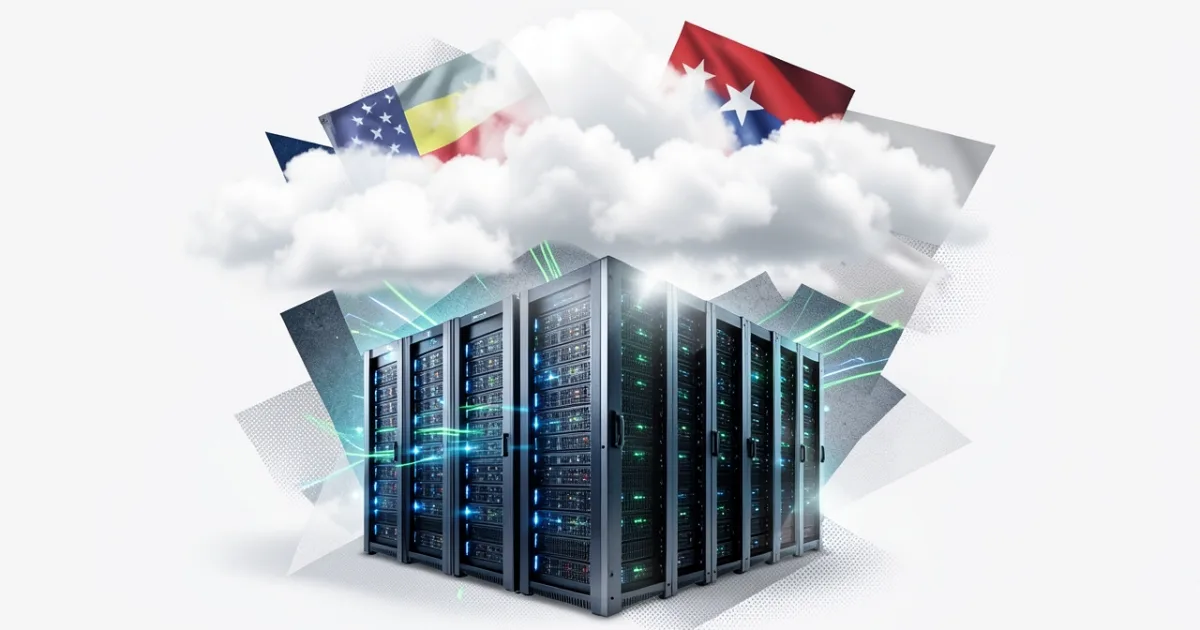
In this article, you will learn what a sovereign cloud is, its key benefits, how it differs from public solutions, and get a practical checklist for choosing a provider.
Contents
- Sovereign Cloud: Concept and Official Definition
- Why a Sovereign Cloud is Important for Business
- Advantages of a Sovereign Cloud over Public Services
- How to choose a sovereign cloud provider: a practical checklist
- Comparison of public and sovereign clouds: which one to choose
- Common mistakes when migrating to a sovereign cloud and how to avoid them
- Results: Key Takeaways and Recommendations for Executives
What is a sovereign cloud? This is a question increasingly asked by CIOs and business executives aiming to secure their data. In this article, you will learn how legislators define the concept, why it is critical for business, and what benefits a company gains by migrating to this type of cloud infrastructure.
We will break down official definitions, current regulatory initiatives in Russia and the European Union in 2026, and show what risks a sovereign cloud mitigates and how it impacts operational efficiency.
Sovereign Cloud: Concept and Official Definition
A sovereign cloud is cloud infrastructure hosted within a national jurisdiction and fully controlled by domestic providers. According to the definition provided by the Ministry of Digital Development of Russia, such services are required to store and process personal and confidential data exclusively on servers located in Russia and provide access to it only in accordance with Russian law.
In the EU, a similar concept is called "digital sovereignty," where the 2026 "Data Governance Act" directive requires that critical citizen data be stored in data centers that meet strict GDPR and localization requirements.
Key elements of the official definition:
- geographic anchoring of servers to the state's territory;
- full control over access and encryption policies;
- compliance with national data protection regulations.
These requirements influence provider selection, as only providers with "RosTech" or "EU-Cloud-Secure" certification can guarantee the legal integrity of operations.
Why a Sovereign Cloud is Important for Business
Data breaches and external sanctions are the two main risks faced by companies using public clouds located outside their country. In 2025, several large banks were forced to suspend operations due to restricted access to data hosted in American data centers.
A sovereign cloud eliminates these threats by allowing control over every stage of information processing. For banks and government agencies, this means:
- Compliance with FSB and Central Bank requirements for storing financial information;
- Guaranteed access to data even in the event of international sanctions;
- Simplified auditing and reporting to regulators.
According to TGRank data as of October 26, 2026, there are 113 Telegram channels in the "Technology and IT" category with a total audience of 15,572,925 subscribers and a median engagement rate of 7.1%. This reflects the growing interest in topics of digital sovereignty and cloud solutions within the professional community.
Practical example: a large Russian telecom operator migrated its customer data to a sovereign cloud center, which allowed it to reduce service response time by 30% and avoid potential fines for violating localization requirements.
Tip: Before migrating, conduct an independent audit of your current data and determine which parts are subject to mandatory localization.
For a more detailed overview of available providers and their rates, you can check out the catalog of Telegram channels in the "Technology and IT" category, which includes statistics and pricing for advertising placements.
Advantages of a Sovereign Cloud over Public Services
Data Control and Jurisdiction
Data is stored within Russia, making it subject to local personal information laws. This simplifies interaction with FSTEK and Roskomnadzor.
- Direct access to physical servers allows for auditing without the involvement of third countries.
- Guaranteed localization level – according to TGRank, 7.1 % of IT community subscribers in Russia follow digital sovereignty issues.
- Simplified contractual terms – the contract can explicitly state that all backup copies are located in the RF.
Security and Compliance
Sovereign centers are often certified according to Russian standards (FSTEK, ISO/IEC 27001) and support "deep" GOST encryption.
- Access control is implemented through domestic authentication systems (EGISZ, SBER ID).
- Regular compliance checks help avoid fines for violating GDPR-like requirements.
- Example: a major Russian telecom operator moved client data to a sovereign center and reduced response times by 30 % thanks to local caching.
Flexibility and Customization
Public providers offer a limited set of services, whereas sovereign solutions allow infrastructure to be tailored to specific business processes.
- You can deploy your own Kubernetes cluster with network policy settings that comply with internal regulations.
- Support for specific protocols (e.g., MEET-2) without the limitations of public APIs.
- Possibility of integration with national services (Electronic Signature, Gosuslugi) within a single network.
Support for Local Regulations
Sovereign clouds take into account the requirements of FZ-152, FZ-59, and other regulations, which is critical for banks, government agencies, and companies working with personal data.
- Automatic application of data classification rules in accordance with FZ-152.
- Reporting in a unified format compatible with Russian regulatory systems.
- Management of access log storage in accordance with FSTEK requirements.
How to choose a sovereign cloud provider: a practical checklist
Legal framework and certificates
Verify the existence of official licenses and certificates.
- Does the provider have an FSTEC certificate?
- Is compliance with ISO/IEC 27001 confirmed?
- Is the jurisdiction stated in the contract – Russia is mandatory.
Technical infrastructure and service level
Evaluate availability and scalability.
- Guaranteed SLA level ≥ 99.9%.
- Availability of own data centers in Moscow and St. Petersburg.
- Support for hybrid scenarios (VPN, Direct Connect).
Pricing transparency
Avoid hidden fees.
- Clarify the cost per GB of storage, per hour of computing resources, and for traffic.
- Request a price list with a breakdown by service.
- Compare with the catalog of "Technology and IT" Telegram channels – according to TGRank data, the average price per GB in sovereign solutions in 2026 is 0.12 USD.
Migration and integration support
Having professional services available will speed up the transition.
- Does the provider have a team of migration engineers?
- Are tools for automatic data synchronization with public clouds offered?
- Is it possible to test the service during a free trial period (at least 30 days)?
| Criterion | Provider A | Provider B | Provider C |
|---|---|---|---|
| FSTEC certificate | Yes | No | Yes |
| SLA | 99.95% | 99.9% | 99.99% |
| Cost per GB | 0.11 USD | 0.13 USD | 0.12 USD |
| Trial period | 30 days | 14 days | 30 days |
Tip: run a pilot project with a limited dataset, measure latency and costs, and only then scale your entire IT infrastructure.
Comparison of public and sovereign clouds: which one to choose
Public services offer scalability and a low starting price, but control over data remains with the provider. Sovereign solutions require more thorough integration but provide full compliance with national legislation and the ability to control server location.
| Characteristic | Public clouds | Sovereign clouds |
|---|---|---|
| Data control | Limited by provider terms | Full, including localization and encryption |
| Cost | Pay-as-you-go, often lower per GB | Higher base price (≈0.12 USD/GB), but fixed SLAs reduce hidden costs |
| Infrastructure flexibility | Wide range of services, fast launch | Limited set, but with customization options for regulatory requirements |
| Regulatory compliance | Depends on provider jurisdiction, often requires additional audit | Compliance with FSTEC, GDPR, and local laws by default |
| Deployment speed | Days to weeks | A week to a month, considering security vetting |
Selection scenarios:
- Startups and budget-conscious projects. Public clouds allow for a fast MVP launch without capital investment.
- Large financial organizations. Require a sovereign cloud to store personal data in accordance with FZ-152 and to avoid penalties.
- Government institutions. Obligated to use solutions located in the RF that have passed FSTEC certification.
- Companies operating in international markets. A combination of public services for global access and sovereign nodes for local data storage.
Tip: Before a full migration, conduct a pilot in a hybrid model—part of the workload in a public cloud, part in a sovereign one—and compare latency and costs.
For a more detailed analysis of the sovereign provider market, you can refer to the catalog of Telegram channels in the "Technology and IT" category, where prices and reach are listed.
Common mistakes when migrating to a sovereign cloud and how to avoid them
Inadequate assessment of regulatory requirements
Companies often ignore the details of personal data storage laws. Consequences include fines, suspension of operations, and reputational damage. Prevention: create a checklist of requirements for Federal Law 152-FZ, GDPR, and industry standards; consult with a lawyer before choosing a provider.
Ignoring migration costs
Incorrectly estimated costs for data transfer and application adaptation can increase the budget by 2–3 times. To avoid surprises, calculate the migration cost using the "TGRank data" model (example calculation in the article How to calculate the cost of migrating to the cloud) and include a contingency fund of ≈ 15% of the total amount.
Lack of a backup plan
Without a clear backup strategy, data can be lost during failures or attacks. Consequences include downtime and loss of customer information. Preventive steps: define RPO/RTO, set up automatic copying to a separate data center, and test recovery at least once a quarter.
Typical consequences of these errors include increased expenses, project delays, and compliance violations. When planning your transition, include a separate audit stage for requirements, a detailed migration budget, and a test backup recovery plan in your roadmap.
Results: Key Takeaways and Recommendations for Executives
A sovereign cloud is infrastructure located within the customer's legal jurisdiction that fully complies with national data protection laws. As of October 26, 2026, the TGRank catalog contains 113 Telegram channels in the "Technology and IT" category with a total audience of 15,572,925 subscribers and a median engagement rate of 7.1%, according to TGRank. These figures confirm the growing interest in compliance and local cloud topics.
For companies where data control is critical, a sovereign cloud offers three key advantages: guaranteed data sovereignty, a predictable cost model, and the ability to react quickly to regulatory changes.
Practical Recommendations
- Assess your risk profile. If your business processes personal data of citizens, financial reports, or intellectual property, migrating to a sovereign cloud is a necessary step to comply with GDPR-RU, Federal Law No. 152-FZ, and similar regulations.
- Create a provider checklist. Include ISO 27001 certifications, data center localization, SLA metrics for availability ≥ 99.9%, and the ability to flexibly configure network zones.
- Plan for a contingency fund. As shown in the article on calculating migration costs, add ≈ 15% to your budget for unforeseen expenses and backups.
- Test your recovery. Define an RPO ≤ 4h and an RTO ≤ 8h, and conduct a full recovery test at least once per quarter.
"Without a clear backup strategy, data can be lost during failures or attacks. Plan backups as a separate project, not just as an 'add-on' to migration," advises a cybersecurity expert.
Do not postpone your audit of requirements and provider selection: a timely transition will reduce the risks of fines and downtime, and will also strengthen customer trust. For more details on choosing a provider, read our "Technology and IT" category Telegram channel catalog, which contains up-to-date rankings and advertising prices.
Telegram channels on the topic
Picked by the TGRank team: channels with a real audience — to read and to advertise in
 ✓
Глобальная экономика в деталях: канал раскрывает макроэкономические тенденции, влияющие на ваш бизнес и личные финансы. Здесь вы найдёте аналитические обзоры мировых рын…
 ✓
Бизнес стиль — это не только внешний имидж, но и система ценностей, влияющих на эффективность компании. Канал сочетает материалы о брендинге, корпоративной культуре и уп…
 ✓
Заметки бизнесмена — это личный дневник опытного руководителя, превращённый в полезный ресурс для коллег. В постах делятся инсайтами из повседневного управления, стратег…
 ✓
Бизнес‑люди объединяются в этом канале, чтобы делиться реальными кейсами из разных отраслей. Здесь публикуются интервью с предпринимателями, разборы ошибок и практически…

Гаджеты и смартфоны в центре вашего внимания – здесь каждый найдет свежие обзоры новинок, сравнения моделей и лайфхаки по использованию. Канал регулярно публикует видео‑…

Как быстро понять, какие технологии действительно меняют мир? Канал «Искусственный интеллект. Высокие технологии» ежедневно отбирает главные новости, исследования и прак…